
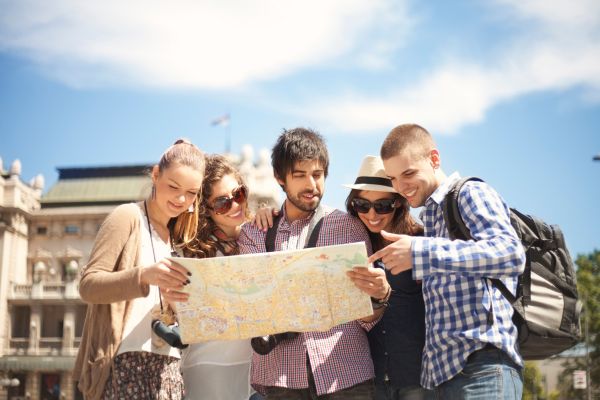
Travel often begins with familiar plans. A destination is chosen, a ticket is booked, and a rough idea of the journey takes shape. Yet some of the most memorable trips are defined by people who were never part of the original plan.
Traveling with strangers can feel uncertain at first. There is no shared history, no established rhythm, and no guarantee that personalities will match. One person may wake before sunrise, while another prefers slow mornings. Someone may carefully track every expense, while someone else barely looks at prices. Even deciding where to eat can become a small negotiation.
Still, strangers have a way of changing a journey. They offer new perspectives, unexpected help, and stories that would not have appeared during a carefully controlled trip. Sometimes they remain strangers for only a few hours. Sometimes they become friends for years.
The connections formed on the road are often intense because travel places people in unfamiliar situations. Plans fail, transport is delayed, and everyone becomes slightly more dependent on one another. In those moments, trust can grow surprisingly quickly.
A Shared Taxi Through the Mountains
A young traveler arrived at a remote bus station late in the afternoon, expecting to find regular transport to a mountain village. Instead, the final bus had already left.
Several other passengers were in the same situation. None of them knew each other. There was a couple from another country, a university student traveling alone, and an older man carrying a large fabric bag filled with groceries.
After a long conversation involving translation apps, gestures, and repeated pointing at a map, the group agreed to share a taxi.
The journey took nearly three hours. At first, everyone sat quietly, unsure how much conversation was expected. Then the road became rough, the driver began telling jokes, and the older man opened his bag.
He passed around fruit, bread, and small packets of roasted nuts. The couple shared chocolate. Someone played music from a phone. By the time the taxi reached the village, the passengers had exchanged travel plans and agreed to meet for dinner.
What began as a practical arrangement became the first real memory of the trip.
This is one of the curious things about traveling with strangers. A connection may begin because of a problem, yet the problem is often forgotten while the people are remembered.
Night Trains Create Temporary Communities
There is something unusual about sleeping near people whose names you learned only minutes earlier.
On an overnight train, personal space changes. Bags are stacked together, food is shared across narrow tables, and everyone must quietly negotiate lights, windows, and sleeping positions.
One traveler once boarded a crowded night train expecting a silent journey. Instead, she found herself in a compartment with three strangers: a teacher returning home, a musician carrying a guitar, and a grandmother traveling to visit her family.
The conversation began with ordinary questions. Where are you going? How long have you been traveling? Is this your first time here?
A few hours later, the musician was playing softly while the grandmother handed out homemade biscuits. The teacher explained the history of the towns passing outside, though darkness had made them almost invisible.
In the morning, everyone left at different stations. There were quick hugs, unfinished conversations, and promises to stay in touch.
Not all of those promises lasted, but that did not make the evening less meaningful. Some travel friendships belong only to a certain place and time. Their temporary nature is part of what makes them special.
Group Tours Can Bring Opposites Together
Organized tours are often dismissed as predictable, yet they can create unusual social combinations. People of different ages, backgrounds, and personalities are placed together for several days, usually with no easy way to avoid one another.
A quiet accountant may end up sharing a room with an energetic photographer. A retired teacher may spend a long bus ride beside a student taking a gap year. Under normal circumstances, their paths might never cross.
At the beginning, these differences can create tension. Some travelers move quickly, while others stop to examine every detail. Some enjoy conversation from breakfast until bedtime. Others need long periods of silence.
Gradually, the group develops its own rhythm.
One person becomes skilled at reading maps. Another remembers departure times. Someone always carries snacks. The least organized traveler may unexpectedly become the calmest person when plans go wrong.
These roles are rarely discussed, but they shape the experience. Traveling with strangers often reveals strengths that are less visible in ordinary life.
Trust Grows Through Small Decisions
People do not usually begin a journey by making large declarations of trust. Trust develops through small actions.
Someone watches another person’s luggage while they buy a ticket. A traveler lends a phone charger without hesitation. Two people agree to split the cost of accommodation and quietly hope the arrangement will be fair.
Each small decision builds confidence.
During a road trip across a rural region, three travelers who had met at a hostel decided to rent a car together. None of them knew much about the others. They only knew that they wanted to follow the same route.
The first day was awkward. They disagreed about music, stopped too often, and spent far too long searching for lunch. By the third day, they had developed an easy system. One drove, one navigated, and one searched for places to stay.
When the car developed a mechanical problem on a quiet road, the group worked together without panic. One spoke to a local mechanic, another contacted the rental company, and the third kept track of their bags and documents.
The breakdown delayed them for hours, but it also changed the group. After solving a difficult problem together, they no longer felt like three separate travelers sharing a vehicle.
Differences Become More Visible on the Road
Travel can bring people closer, but it can also expose incompatibility very quickly.
Money is one common source of disagreement. A person traveling on a strict budget may feel uncomfortable when others repeatedly choose expensive restaurants. Another may become frustrated by someone who insists on calculating every tiny shared cost.
Energy levels also differ. One traveler may want to explore from sunrise until late evening, while another becomes exhausted after a few hours.
These differences do not always lead to conflict. Often, they teach people to communicate more clearly.
A pair of strangers traveling together through several cities once realized that they had completely different habits. One enjoyed detailed plans. The other preferred deciding everything at the last minute.
At first, both assumed the other would eventually adapt. Neither did.
Finally, they created a simple agreement. Some days would be planned in advance. Other days would remain open. They also began spending part of each day separately.
The trip improved immediately.
Traveling with strangers does not require doing everything together. In fact, giving each other space can protect the connection.
Shared Meals Turn Strangers into Companions
Food often makes conversation easier.
Around a table, people have something immediate to discuss. They compare dishes, ask questions, share reactions, and sometimes laugh at their own confusion.
In a small guesthouse kitchen, five travelers from different countries once decided to cook dinner together. Each person contributed something from a nearby market.
Nobody had planned the meal properly. There were too many vegetables, not enough rice, and several ingredients that nobody knew how to prepare.
The result was imperfect but memorable.
While cooking, they spoke about home, family, work, and the reasons they had chosen to travel. The conversation became more personal than any of them expected.
By the end of the evening, the kitchen was messy, the food was almost gone, and plans had been made for the following day.
Shared meals create a sense of familiarity. Even when the food is simple, sitting together can make temporary companions feel like a small community.
Safety Still Matters
Openness is valuable, but caution remains important.
Travelers should trust their instincts, protect important documents, and avoid depending completely on someone they have just met. Sharing plans with a trusted person, keeping control of personal money, and arranging independent transport when necessary are sensible habits.
A stranger can become a wonderful travel companion, but trust should develop gradually.
Healthy boundaries do not ruin spontaneity. They make it safer.
It is also acceptable to leave a situation that feels uncomfortable. A traveler does not owe continued companionship to someone simply because they shared a meal, a taxi, or part of a route.
The best connections are based on mutual respect. When one person pressures, controls, or ignores boundaries, the journey is no longer truly shared.
Some Friendships Continue After the Trip
Many travel connections fade naturally. Messages become less frequent, time zones make calls difficult, and everyday responsibilities return.
Others continue.
Two people who met while hiking may visit each other years later. A group formed during a delayed flight may continue exchanging birthday messages. Former hostel roommates may plan another journey together.
These friendships often carry a unique quality. They were formed outside ordinary routines, during a period when everyone was more open, uncertain, and curious.
Even when contact ends, the influence may remain. A stranger may introduce someone to a new kind of music, encourage a career change, or inspire a future destination.
The relationship does not need to last forever to have mattered.
The Road Makes Connection Possible
Traveling with strangers is never completely predictable. Personalities may clash, plans may change, and some encounters will remain brief.
Yet the uncertainty is also what creates possibility.
A stranger may help during a difficult moment, offer a perspective that challenges old assumptions, or simply make a long journey feel shorter. Through shared transport, meals, confusion, and laughter, unfamiliar people can become companions with surprising speed.
The most meaningful part of the experience is not that every stranger becomes a friend. It is that travel creates space for connection where none existed before.
A journey may begin with a destination in mind, but it is often the unexpected people along the way who give it shape. Long after the route has faded from memory, their voices, gestures, and kindness remain.