
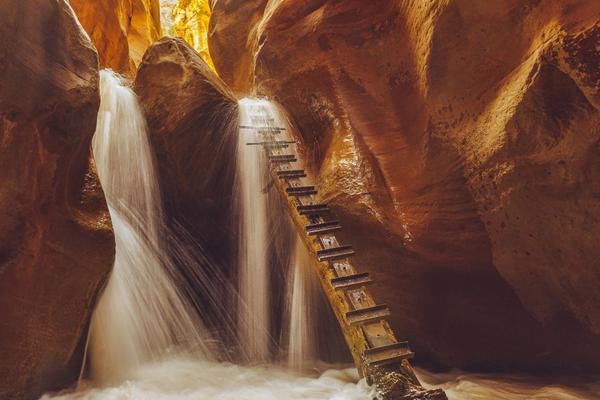
Canyon country rewards careful hikers with enormous walls, hidden alcoves, polished sandstone, and routes that feel far more remote than their mileage suggests. It also concentrates hazards. Heat builds between rock walls, water may be scarce, scrambling can become harder on the return trip, and a drainage that looks dry can become dangerous when rain falls miles upstream. Good canyon hiking tips are therefore less about moving faster and more about making conservative decisions before the terrain removes your options.
Start With the Canyon, Not Just the Trailhead Forecast
Before leaving, check the forecast for the entire drainage and the country upstream, not only the parking area. In the American West, thunderstorms can be highly localized. National Park Service guidance warns that flash floods may arrive even when the sky directly above a canyon is clear. If rain or thunderstorms are possible, especially in a narrow slot, wash, or drainage with few exits, choose another hike.
Check current park or land-manager alerts, road conditions, water availability, and permit requirements. Download an offline map and note where the route enters constricted terrain. Keep watching cloud development and changing conditions throughout the day.
Manage Heat Before It Becomes an Emergency
Desert canyon trails can be hotter than nearby rim country because elevation drops, shade changes through the day, and rock and sand reflect heat. Start early when appropriate, plan the hardest climbing for cooler hours, and avoid an itinerary that forces you through peak afternoon heat.
Wear sun-protective clothing, a brimmed hat, and footwear suited to loose rock and sand. Take breaks before you feel exhausted. Nausea, dizziness, unusual weakness, confusion, or declining coordination are reasons to stop, cool down, and reassess. Heat safety for hikers is worth reviewing before any route with a long exposed climb out.
Carry Water for the Route You Actually Have
Water planning is central to canyon hiking safety. Do not assume a spring, creek, pipe, or seasonal pool will be available because it appears on a map or old trip report. Sources can dry up, become contaminated, or be shut off.
Use current local guidance to estimate water needs for distance, temperature, exposure, and effort. Carry extra capacity, bring food and electrolytes for longer or hotter outings, and avoid both dehydration and excessive forced drinking. If your route depends on natural water, carry a reliable treatment method and confirm the source is currently flowing.
Read the Terrain in Both Directions
A canyon route may feel easy while descending and surprisingly technical on the way back. Dry falls, ledges, chockstones, loose slopes, and short climbs deserve a simple test before you continue: can everyone in the group reverse this obstacle without relying on an unverified rope, a jump, or someone stronger pulling them up?
This matters on slot canyon hiking routes, where narrow walls can limit bypasses. If a move feels marginal on the descent, turn around while the decision is still easy. Unmaintained ropes or webbing found in the field should never be treated as guaranteed safety equipment.
Use Turnaround Points Before You Need Them
Set a time-based turnaround before starting and add terrain-based triggers. Turn back if you reach a constriction later than planned, use water faster than expected, see storms building upstream, or encounter an obstacle the least-experienced hiker cannot confidently reverse. Clear rules prevent the mistake of continuing simply because the destination feels close.
Understand Flash Flood Warning Signs
Flash flood hiking safety begins with avoidance. Water can collect from a large watershed and funnel through a small passage with little warning. Before entering a confined section, identify benches, side slopes, or exits that could lead to higher ground, while recognizing that some slots have no safe escape once you are committed.
Warning signs can include a sudden rise in water, water turning muddy, increasing debris, or a growing roar from upstream. If you notice these signs, move to higher ground immediately rather than trying to outrun the flow down-canyon. Never camp in a dry wash or in the obvious path of previous high water.
A Practical Canyon Decision
Imagine reaching a half-mile slot at noon. The sky above is blue, but dark clouds are building over the plateau that drains into the canyon. Your map shows no practical exits inside the narrows. The safer choice is to turn around before entering, even if the storm appears distant. That choice preserves your escape route while you still have one.
Navigation and Communication Need Backups
Cairns, footprints, and faint social trails are not dependable navigation systems. Carry an offline topographic map or mapping app, know your entry and exit points, and note major side drainages that could confuse the return. Route-finding basics are especially useful where tall walls can make navigation less obvious.
Tell someone your route, vehicle location, expected return time, and what they should do if you are overdue. Cell service is often poor. For remote trips, a satellite communicator or personal locator beacon can add useful emergency backup, but it should not replace conservative decisions or self-rescue skills.
Pack for Delay, Not Just for Mileage
A short canyon can become a long day if route finding, scrambling, heat, or injury slows the group. Carry basic first aid, a headlamp, season-appropriate insulation, sun protection, navigation tools, extra food, and enough water capacity. A desert hiking essentials checklist should be built around exposure and remoteness, not trail mileage alone.
Frequently Asked Questions
What is the biggest danger when hiking in a canyon?
There is no single hazard on every route, but heat, flash floods, falls, navigation errors, and inadequate water are recurring risks. The dominant danger depends on season, canyon shape, elevation, weather, and route difficulty.
Is slot canyon hiking safe when the sky is clear?
Clear sky overhead does not guarantee safety. Rain falling upstream can send water into a slot canyon from miles away. Check the broader drainage forecast and avoid narrow canyons when storms or flash flooding are possible.
How much water should I carry for a canyon hike?
There is no universal amount that fits every hike. Needs vary with heat, distance, effort, shade, and access to reliable water. Follow current local guidance, carry a sensible reserve, and do not depend on an unconfirmed source.
When should I turn around on a canyon route?
Turn around when weather worsens, water reserves are being used faster than planned, navigation becomes uncertain, a technical obstacle cannot be safely reversed, or your preset turnaround time arrives. Reaching the endpoint is optional; keeping a safe route home is not.
Make Conservative Choices Before the Canyon Makes Them for You
The best canyon hiking tips share one principle: keep your options open. Check weather upstream, manage heat early, carry dependable water, treat scrambling as a two-way problem, and establish turnaround points before pressure builds. Canyon country is most enjoyable when preparation leaves room to change the plan. A shorter hike, a different drainage, or an early exit can be the decision that turns a risky day into a reason to come back.