
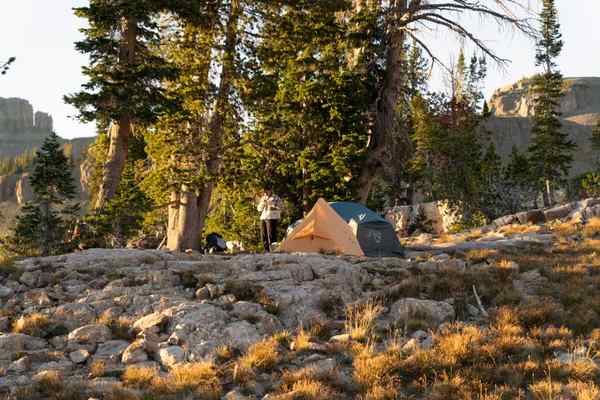
Backcountry camping in a national park starts where ordinary hiking ends. Once you plan to sleep beyond a developed campground, the trip becomes less about choosing a scenic trail and more about managing permits, legal campsites, water, food, weather, waste, and the possibility that help may be hours away. The reward is a quieter wilderness experience, but improvisation is harder.
Treat national park backcountry camping as a route-and-regulations problem before treating it as a gear problem. Rules can vary by park, season, trail corridor, campsite, or wilderness zone. A method legal in one park may be prohibited in another, so current park guidance should be your starting point.
Start With the Permit, Not the Trailhead
Many parks require a wilderness or backcountry permit for overnight travel, while some park units do not. Reservation systems also differ. Some trips can be reserved in advance, some include walk-up options, and others limit campers to designated sites or specific zones. Backpacking permits may also set group-size limits, campsite assignments, food-storage rules, or seasonal closures.
Before building an itinerary, confirm where camping is allowed and how your permit works. A scenic lake on a map is not automatically a legal campsite. In heavily used areas, camping may be restricted to numbered sites. Elsewhere, a permit may assign you to a broader cross-country zone. Read the permit conditions because they are part of your trip plan.
Build a Route You Can Finish Before Dark
Backcountry mileage can be misleading. Eight miles on a smooth valley trail is very different from eight miles with major elevation gain, rough river crossings, snowfields, desert heat, or a full overnight pack. Estimate each day using distance, climbing, terrain, daylight, breaks, and the pace of the slowest person in the group.
Create both a primary route and a simpler fallback. If thunderstorms build early, a creek rises, a trail is closed, or someone develops a painful blister, your backup should not depend on heroic speed. Download official maps for offline use, carry a paper map when appropriate, and know how to navigate without cell service.
For example, on a two-night trip with camps six and seven miles from the trailhead, put the shorter leg on the arrival day. Reaching camp with daylight to spare gives you time to collect and treat water, store food properly, and deal with a small delay before darkness turns it into a larger problem.
Know What Counts as a Legal Campsite
Front-country camping usually gives you a pad, table, toilet, and obvious boundaries. Wilderness camping may give you none of those. Where designated sites exist, use them exactly as required. Where dispersed camping is allowed, choose durable surfaces and follow the park’s distance rules for water, trails, and sensitive areas.
Do not expand a site by moving logs, digging drainage trenches, clearing vegetation, or building new fire rings. Fire rules deserve special attention because many backcountry areas prohibit campfires even when a backpacking stove is allowed. Check current restrictions shortly before departure.
Plan Food Storage Before You Pack Food
Food storage is one of the biggest differences between casual national park camping and a backcountry stay. National Park Service rules vary by location. Some areas require an approved bear-resistant canister, some provide lockers or food poles, and some allow specific hanging methods. Rodents and other wildlife can also be a concern.
Treat toiletries, trash, cooking residue, and other scented items as part of the same system as food. Never assume that a sealed snack wrapper or toothpaste tube is harmless in your tent. Check the park’s instructions before leaving home so you know which storage method is required for your itinerary.
Treat Backcountry Water Before Drinking It
Streams and lakes can look pristine while still carrying microorganisms that can make you sick. The National Park Service advises backcountry visitors to filter or purify water used for drinking and food preparation. Carry a treatment method suitable for the park and a backup option if your primary filter fails.
Water availability can change with season. A creek shown on a map may be dry late in summer, while desert routes may require you to carry much of the water you need. Check current conditions and calculate capacity between reliable sources rather than simply counting blue lines on a map.
Sanitation Rules Depend on the Landscape
Human-waste rules are not universal. In many areas, visitors are directed to use toilets when available or bury solid waste in a cathole roughly 6 to 8 inches deep and well away from water, trails, and camp. Fragile alpine, desert, canyon, or heavily used areas may instead require you to pack out solid waste in an approved waste bag.
Verify the rule for your exact destination. Pack out toilet paper and hygiene products when required, and keep washing and dishwater away from natural water sources. Good sanitation protects both water quality and the next camper’s experience.
Prepare for Weather and Delayed Rescue
Cell coverage may be weak or nonexistent, sudden weather can change trail conditions, and search-and-rescue response may not be immediate. Carry navigation, illumination, insulation, first aid, extra food, emergency shelter, sun protection, and other essentials appropriate to the trip.
Leave a written trip plan with a trusted person who is not going with you. Include your route, camps, vehicle location, group details, expected return time, and what that person should do if you are overdue. A satellite messenger or personal locator beacon can add an important communication option, but it should not replace conservative decisions.
Before leaving the trailhead, check current park alerts, trail conditions, fire information, and the weather forecast. A backpacking packing checklist, a Leave No Trace camping guide, and a backcountry route-planning guide are useful companion resources when preparing for this kind of trip.
Frequently Asked Questions
Do you need a permit for national park backcountry camping?
Often, but not always. Many national parks require permits for overnight backcountry stays, while some park units have different rules. Always check the specific park’s official backcountry information before planning an overnight route.
Can you camp anywhere in a national park backcountry area?
No. Some parks allow camping only at designated sites, while others use zones or permit dispersed camping under specific conditions. Your permit and current park regulations determine where you may legally camp.
Do you always need a bear canister?
No. Requirements vary by park, area, and sometimes season. Some locations require approved hard-sided canisters, some provide lockers, and others allow different food-storage methods. Follow the exact rule for your itinerary.
Is backcountry water safe to drink without treatment?
You should not assume it is. Backcountry water can contain disease-causing microorganisms even when it looks clean. Use the treatment method recommended for the park and carry enough capacity to manage long dry sections.
Plan for the Night, Not Just the Hike
The safest wilderness camping trips are built around what happens after the walking stops. You need a legal place to sleep, a reliable water plan, compliant food storage, a waste strategy, weather awareness, and enough self-reliance to handle delays. Do that planning before the trailhead, and backcountry camping becomes far less about reacting to problems and far more about enjoying the place you worked to reach.